Accurate measurement is not a “nice-to-have” in India—it’s regulated. If you manufacture, import, pack, sell, repair, or verify weighing and measuring instruments (or sell pre-packaged goods), you will almost certainly touch Legal Metrology compliance.
This guide is written for founders, plant heads, QA/QC teams, compliance managers, and lab entrepreneurs who want a clear, actionable view of: Legal metrology basics, lab setup, registration, cost, license and GATC legal metrology.

What is Metrology?
Metrology is the science of measurement. In business terms, it answers three questions:
- Are you measuring correctly? (accuracy)
- Can you prove it? (traceability to standards)
- Can you repeat it consistently? (repeatability & uncertainty control)
Metrology shows up everywhere: weighing scales, flow meters, pressure gauges, temperature sensors, fuel dispensers, clinical thermometers, tape measures, weighbridges, and more.
What is Legal Metrology?
Legal Metrology is metrology enforced by law—measurement requirements that protect consumers and ensure fair trade.
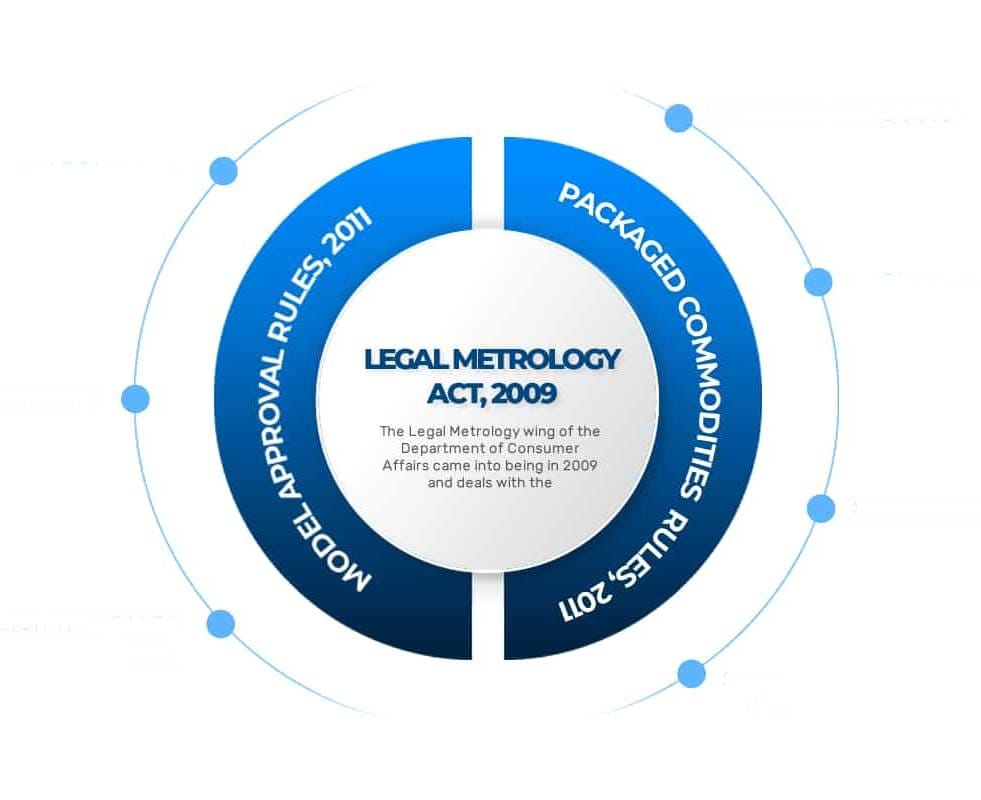
In India, Legal Metrology is governed under the Legal Metrology Act, 2009 and supporting rules administered by the Department of Consumer Affairs.
Legal Metrology typically covers:
- Weights & measures used in trade/commerce
- Weighing and measuring instruments
- Packaged commodities (label declarations, quantity statements, MRP, importer/packer identity, etc.)
Legal Metrology License vs Legal Metrology Registration (Don’t Mix Them Up)
A lot of applicants lose weeks because they apply for the wrong approval.
1) Legal Metrology License (State-focused)
You generally need a state Legal Metrology license if you are a:
- Manufacturer of weights/measures or weighing/measuring instruments
- Dealer (selling such instruments)
- Repairer (repairing such instruments)
These licenses are usually handled through the State Legal Metrology Department (Controller of Legal Metrology), often via state portals.
2) Legal Metrology Registration (Packaged Commodities / LMPC)
If you pack, manufacture-and-pack, or import pre-packaged commodities, you typically need registration under the Legal Metrology (Packaged Commodities) Rules (commonly called LMPC registration).
The Department of Consumer Affairs indicates that such applications may route through national single-window mechanisms (and related systems), and there are also dedicated portals.
Bottom line:
- Instruments business = license (manufacturer/dealer/repairer)
- Pre-packaged goods business = packaged commodities registration (LMPC)
Many businesses need both.
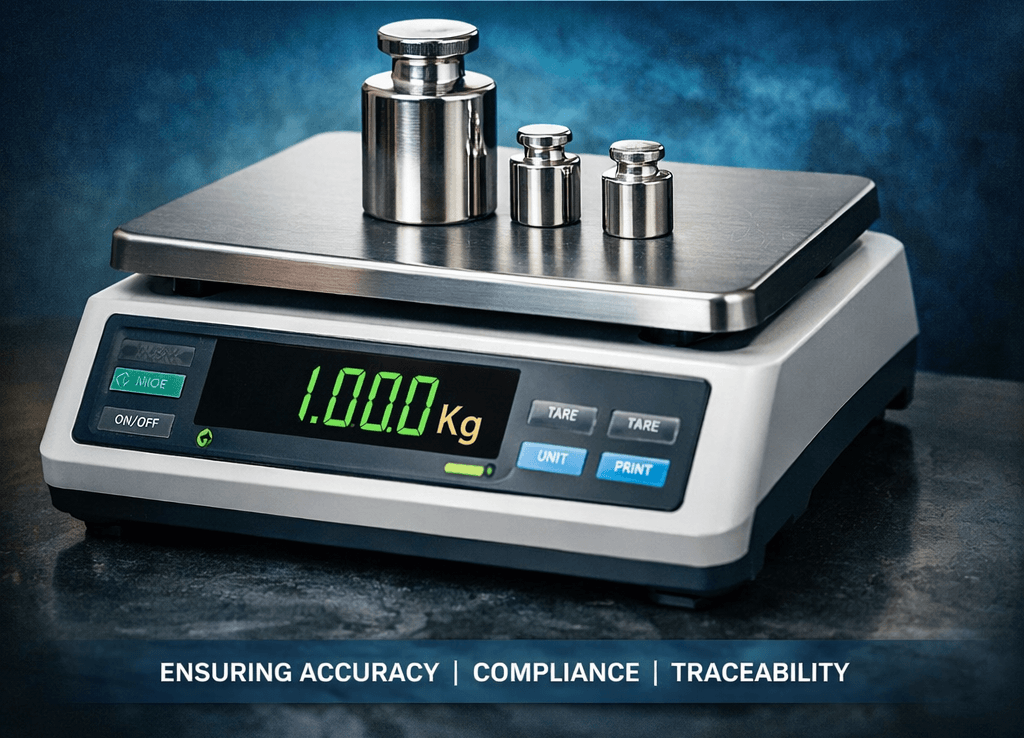
Legal Metrology Online Registration: How It Works?
“Online registration” is not one single website for everything in every state. In practice, India runs a hybrid model:
- Central systems for select approvals and registrations
- State Legal Metrology department portals for licensing and enforcement
A good example of state-specific online guidance is the India.gov.in service listing for packaged commodities licensing/registration at the state level.
Typical Online Workflow (Most States)
- Create account on state portal / designated platform
- Select license type (manufacturer / dealer / repairer) or packaged commodity registration route
- Upload documents
- Pay government fee
- Site inspection / verification (common for instrument-related licenses)
- Approval + certificate/license issued
- Renewal (often yearly or multi-year options depending on state rules)
Documents You’ll Usually Need
Exact lists vary by state and license type, but most departments ask for:
Business & Identity
- Incorporation/registration proof (Company/LLP/Partnership/Udyam, etc.)
- PAN, GST
- Address proof of premises (ownership/lease, utility)
- Authorized signatory proof
Premises & Capability
- Layout / photographs of premises
- List of instruments (and ranges) handled/sold/repaired/manufactured
- Tools/equipment list (especially for repairer/manufacturer)
- Staff competency details (technicians, qualifications, experience)
Packaged Commodities (LMPC) Typically Needs
- Product/category details
- Packaging types and label artwork or declarations approach
- Importer/manufacturer/packer details
- Sample label compliance proof (often the real pain point)
Legal Metrology License Fees
There is no single all-India fee for every category because licensing is heavily state-administered. However, many states follow fee schedules with common patterns (license issue, renewal, alteration, duplicate copy, etc.).
To give you a real-world reference, Uttarakhand’s published fee schedule shows examples like:
- Manufacturer license/renewal around ₹500 per year
- Repairer around ₹100 per year
- Dealer around ₹100 per year
Important: Your total spend is usually not the government fee—your cost is driven by:
- Readiness of premises and tools
- Calibration/traceability documentation
- Any required inspections and corrective actions
- Consultant/internal compliance effort (optional but common)
TALK TO A LEGAL METROLOGY & GATC EXPERT
Planning a GATC or Advanced Legal Metrology Lab?
Avoid approval delays, scope rejections, and post-approval non-conformities. Get an expert-led roadmap for GATC approval, metrology lab setup, calibration governance, and long-term compliance sustainability.
What is “GATC” in Legal Metrology?
GATC means Government Approved Test Centre.
A GATC is a private/industry-established facility approved to undertake verification of certain weights or measures, as permitted under the rules.
In late 2025, India moved to update/modernize the framework through the Legal Metrology (GATC) Rules, 2025 (as publicly communicated by government channels).
When Does GATC Matter to You?
- If you want to become an authorized verification centre (a serious, regulated setup)
- If your business depends on high-volume verification and you want a structured model instead of repeated dependence on limited government infrastructure
Practical note: GATC is not a shortcut. It’s a compliance-heavy, credibility-driven operating model.
Metrology Lab
A metrology lab is a controlled facility where measurement standards are maintained and measurement systems are verified/calibrated.
There are two common categories:
1) Internal Metrology Lab (For a Factory)
Purpose: Support production quality and compliance internally—reduce downtime, strengthen traceability, improve audits.
2) Commercial Calibration Lab (Service Business)
Purpose: Provide calibration certificates to external clients, typically with accreditation expectations (often NABL in India).

Metrology Calibration: What “Good” Looks Like?
Calibration isn’t just “checking” an instrument. A credible calibration system includes:
- Defined methods/procedures
- Reference standards with traceability
- Environmental control (temperature, humidity, vibration where applicable)
- Measurement uncertainty estimation
- Calibration intervals and recall system
- Proper certificates and record retention
If you plan to run a calibration lab in India, ISO/IEC 17025 competence requirements (and NABL accreditation route) are the standard benchmark.
Metrology Lab Setup: Step-by-Step Blueprint
Step 1: Decide Your Scope (This Determines Everything)
Examples of scope:
- Mass (balances, weights)
- Temperature (thermometers, sensors)
- Pressure (gauges, transmitters)
- Volume/flow
- Dimensional (verniers, micrometers, gauges)
- Weighbridges / automatic instruments
Tip: Start with a narrow scope you can execute flawlessly. Expand later.
Step 2: Facility Planning
- Separate calibration area vs receiving/storage
- Controlled environment (HVAC, stable power)
- ESD controls where needed
- Workbenches, anti-vibration tables (for sensitive mass/dimensional work)
Step 3: Buy Reference Standards (Your Biggest Credibility Asset)
- Reference weights / master thermometers / pressure standards etc.
- Ensure traceability and re-calibration plan
Step 4: Build the System (SOPs + Records)
- Calibration procedures
- Uncertainty templates
- Equipment maintenance SOPs
- Customer intake and report formats
- Nonconformance and corrective action process
Step 5: People Competency
Even with perfect instruments, untrained handling ruins results. Define:
- Training plan
- Competency evaluation
- Authorization matrix (who can sign what)
Step 6: Accreditation Decision (Optional But Market-Defining)
If you want enterprise clients, you’ll likely need NABL alignment/accreditation with ISO/IEC 17025.

Metrology Lab Setup Cost
There is no honest “one-size” number because the cost depends on scope, accuracy class, and whether you want accreditation readiness.
Instead, think in cost blocks:
A) Infrastructure
- Space buildout, HVAC, electrical stabilization, benches
- Environmental monitoring (temp/humidity loggers)
B) Reference Standards and Equipment
This is usually the largest capex and varies wildly:
- Basic industrial-grade standards (entry)
- High-precision standards (expensive fast)
C) Software & Systems
- Calibration management system (optional but helpful)
- Document control and record retention
D) Personnel
- Lab manager/technical signatory capability (for accredited ambitions)
- Technicians
E) Accreditation & Audits (If Chosen)
- Documentation build
- Internal audits, management review
- Assessment fees, corrective actions
Practical Framing:
- An internal factory lab can be built lean if the scope is tight.
- A commercial calibration lab needs stronger systems, traceability, and credibility spend (and usually grows in phases).
Common Reasons Legal Metrology Applications Get Delayed?
- Wrong category selected (dealer vs repairer vs manufacturer vs LMPC)
- Premises not ready for inspection (tools missing, space mismatch)
- Label noncompliance for packaged commodities (missing declarations, incorrect units, inconsistent importer/packer identity)
- Lack of traceability (no calibration records for reference standards)
- Mismatch in documents (name/address inconsistencies across GST, lease, incorporation docs)

1. What is legal metrology online registration?
It’s the digital application process (via state portals and/or designated national systems) used to apply for legal metrology licenses (manufacturer/dealer/repairer) and packaged commodities registrations, depending on your business activity.
2. What is the difference between metrology and legal metrology?
Metrology is the science of measurement; legal metrology is measurement enforced by law for consumer protection and fair trade.
3. What are Legal Metrology license fees?
Fees vary by state and license type. Some state schedules show modest annual government fees (for example, published schedules with ₹500/year for manufacturers and ₹100/year for dealers/repairers in certain states), but your total cost depends on readiness, tools, calibration, and any professional support.
4. What is GATC under legal metrology?
GATC is a Government Approved Test Centre—an approved setup that can perform verification of specified weights/measures under the legal metrology framework.
5. Do I need NABL for a metrology calibration lab?
Not always—but if you want to sell calibration services to serious industrial clients, ISO/IEC 17025 competence and NABL accreditation alignment is the dominant expectation in India.
TALK TO A LEGAL METROLOGY & GATC EXPERT
Planning a GATC or Advanced Legal Metrology Lab?
Avoid approval delays, scope rejections, and post-approval non-conformities. Get an expert-led roadmap for GATC approval, metrology lab setup, calibration governance, and long-term compliance sustainability.