In today’s competitive landscape, businesses are continually seeking ways to improve their operations, enhance customer satisfaction, and gain a competitive edge. One effective way to achieve these goals is through ISO certification. Understanding what ISO certification entails and the benefits it offers can be a game-changer for organizations of all sizes. Let’s dive into the world of ISO certification and explore how it can positively impact your business.
What is ISO Certification?
ISO, or the International Organization for Standardization, is an independent, non-governmental organization that develops and publishes international standards. These standards ensure that products, services, and systems are safe, reliable, and of good quality. ISO certification is a formal recognition that an organization meets specific standards set by ISO.
There are various ISO standards, with ISO 9001 (Quality Management Systems) being one of the most widely recognized. Achieving ISO certification involves a rigorous process of evaluating and improving business processes to meet these internationally accepted standards.
Why Pursue ISO Certification?
The journey toward ISO certification may seem daunting, but the benefits far outweigh the challenges. Here are some compelling reasons why businesses should consider pursuing ISO certification:
1. Enhanced Quality Management
ISO certification provides a structured framework for organizations to improve their quality management systems (QMS). By implementing standardized processes, businesses can ensure consistent quality in their products and services.
Example: A manufacturing company that achieved ISO 9001 certification noticed a significant reduction in defects and rework costs. By adhering to standardized procedures, they improved product quality and customer satisfaction.
2. Increased Customer Satisfaction
One of the primary focuses of ISO standards is meeting customer requirements. Organizations that achieve ISO certification often find that their commitment to quality leads to increased customer satisfaction and loyalty.
Real-Life Anecdote: A small software development firm implemented ISO 9001 practices and saw a dramatic improvement in client feedback. Clients appreciated the consistent communication and high-quality deliverables, which led to repeat business and referrals.
3. Improved Operational Efficiency
ISO certification encourages organizations to streamline their processes, identify inefficiencies, and reduce waste. This focus on continuous improvement can lead to significant cost savings and enhanced productivity.
Practical Advice: Conduct regular audits of your processes to identify areas for improvement. For instance, a retail company might discover that optimizing inventory management could reduce holding costs and improve cash flow.
4. Global Recognition
ISO certification is recognized worldwide, making it easier for businesses to expand into international markets. Having an ISO certification can enhance your credibility with potential clients and partners across borders.
Example: A food processing company seeking to export its products found that obtaining ISO 22000 (Food Safety Management) certification opened doors to new markets in Europe and Asia. The certification reassured international buyers about the safety and quality of their products.
5. Risk Management
ISO standards promote a proactive approach to risk management by encouraging organizations to identify potential risks and implement strategies to mitigate them. This helps ensure business continuity even in challenging circumstances.
Real-Life Example: A healthcare provider adopted ISO 13485 (Medical Devices) standards, which required them to establish risk management protocols for their medical devices. This proactive approach not only improved patient safety but also reduced liability risks.
6. Enhanced Employee Engagement
Achieving ISO certification often requires employee involvement at all levels of the organization. This engagement fosters a culture of accountability and continuous improvement among staff members.
Practical Tip: Involve employees in the process by seeking their input on operational improvements or training needs. A logistics company that engaged its employees in the certification process reported higher morale and job satisfaction as staff felt valued and empowered.
7. Competitive Advantage
In many industries, having an ISO certification can be a differentiator when competing for contracts or clients. It signals a commitment to quality and continuous improvement that can set your organization apart from competitors who do not hold such certifications.
Example: A construction firm found that being ISO certified helped them win bids over competitors who lacked similar credentials. Clients viewed the certification as evidence of reliability and professionalism.
8. Regulatory Compliance
Many industries have specific regulations regarding quality management and safety standards. Achieving ISO certification can help organizations align with these regulations more effectively.
Real-Life Anecdote: A pharmaceutical company faced stringent regulatory requirements but found that implementing ISO 9001 practices streamlined their compliance efforts significantly, reducing the time spent on audits and inspections.
Conclusion
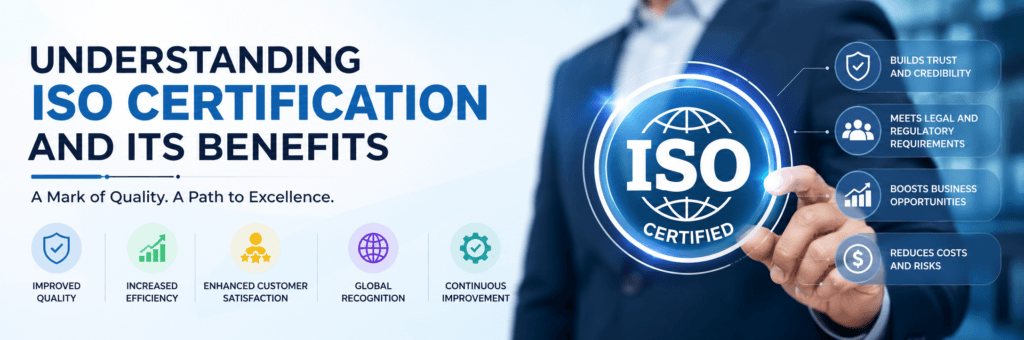
Understanding ISO certification is essential for any business looking to enhance its operations, improve customer satisfaction, and gain a competitive edge in today’s global marketplace. The benefits of achieving ISO certification—such as enhanced quality management, increased customer satisfaction, improved operational efficiency, global recognition, effective risk management, enhanced employee engagement, competitive advantage, and regulatory compliance—make it a worthwhile investment.
While the journey toward obtaining ISO certification may require time and resources, the long-term advantages far outweigh the initial challenges. By committing to quality standards set by ISO, organizations not only improve their internal processes but also position themselves as reliable partners in the eyes of customers around the world.
If you’re considering taking this step for your business, start by researching relevant ISO standards applicable to your industry, engage your team in the process, and take proactive steps toward achieving this valuable recognition!