In our increasingly digital world, cyber threats are a constant concern for individuals and organizations alike. From data breaches to ransomware attacks, the landscape of cyber threats is ever-evolving, making it essential for businesses to identify and mitigate these risks effectively. This article will guide you through the process of identifying cyber threats and implementing strategies to mitigate them, enriched with practical advice and real-life examples.
Understanding Cyber Threats
Cyber threats can take many forms, including malware, phishing attacks, insider threats, and advanced persistent threats (APTs). Recognizing the various types of threats is the first step in developing effective countermeasures.
Real-Life Example: The Target Data Breach
A notable example of a cyber threat is the 2013 Target data breach, where hackers gained access to the personal information of over 40 million customers. The breach was facilitated through a third-party vendor’s compromised credentials, highlighting the importance of not only securing your own systems but also ensuring that partners and suppliers adhere to strong security practices.
Identifying Cyber Threats
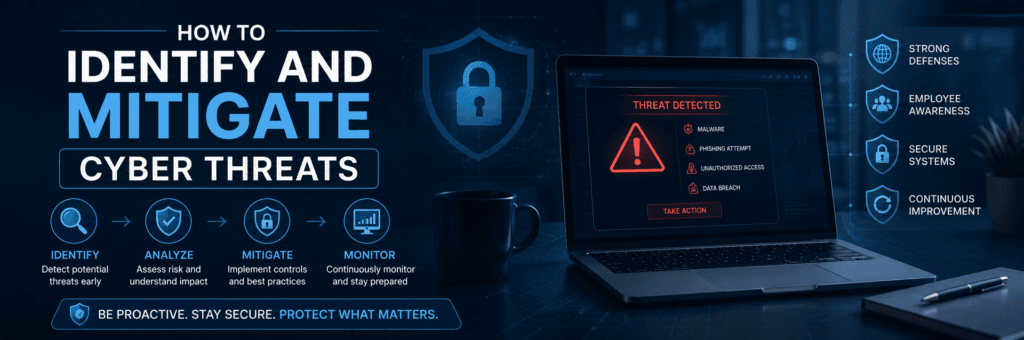
1. Continuous Monitoring
One of the most effective ways to identify cyber threats is through continuous monitoring of your IT environment. This involves using tools that can analyze network traffic, user behavior, and system activities in real-time.
Key Techniques:
- Signature-Based Detection: This method uses known patterns of malicious activity to identify threats. It’s effective for detecting established malware but may struggle with new or sophisticated attacks.
- Anomaly-Based Detection: By establishing a baseline of normal behavior within your network, this technique can help identify unusual activities that may indicate a security threat.
2. Utilizing Threat Intelligence
Threat intelligence involves gathering information about potential threats from various sources. This can include data on emerging vulnerabilities, attack vectors, and known malicious actors.
Practical Advice: Subscribe to threat intelligence feeds or collaborate with industry peers to stay informed about the latest threats relevant to your sector. For instance, financial institutions often share insights about emerging phishing schemes targeting their customers.
3. Conducting Regular Security Audits
Regular security audits help organizations assess their vulnerabilities and identify areas for improvement. These audits should include:
- Reviewing access controls
- Evaluating software and hardware configurations
- Assessing employee training on cybersecurity best practices
Personal Anecdote
In my previous role at a tech startup, we conducted quarterly security audits that revealed several outdated software applications vulnerable to exploitation. By addressing these issues promptly, we significantly reduced our risk profile and improved our overall security posture.
Mitigating Cyber Threats
Once potential threats have been identified, it’s crucial to implement strategies to mitigate them effectively.
1. Implementing Strong Security Policies
Establishing robust security policies is fundamental in mitigating cyber risks. These policies should include guidelines on password management, data handling procedures, and incident response protocols.
Example: A well-defined password policy might require employees to use complex passwords and change them every three months. Implementing multi-factor authentication (MFA) adds an additional layer of security by requiring users to verify their identity through multiple means.
2. Employee Training and Awareness
Human error is often a significant factor in successful cyberattacks. Regular training sessions can help employees recognize phishing attempts and understand best practices for maintaining cybersecurity.
Practical Advice: Conduct simulated phishing exercises to test employees’ awareness and reinforce training lessons. This hands-on approach can help employees better recognize real threats when they encounter them.
3. Investing in Advanced Security Solutions
Utilizing advanced cybersecurity solutions such as Endpoint Detection and Response (EDR) or Extended Detection and Response (XDR) can provide organizations with greater visibility into their security landscape.
- EDR focuses on monitoring endpoints for suspicious activities.
- XDR integrates data from multiple sources (networks, endpoints, cloud environments) to provide a comprehensive view of potential threats.
4. Developing an Incident Response Plan
Having a well-defined incident response plan is critical for minimizing damage in the event of a cyberattack. This plan should outline:
- Roles and responsibilities during an incident
- Steps for containment and eradication
- Communication strategies for stakeholders
Real-Life Example: The Equifax Breach
The Equifax data breach in 2017 serves as a stark reminder of the importance of incident response planning. After hackers exploited a known vulnerability in their software, Equifax faced significant backlash due to its slow response and lack of transparency regarding the breach.
Conclusion
Identifying and mitigating cyber threats is an ongoing process that requires vigilance, proactive measures, and continuous improvement. By implementing robust monitoring solutions, leveraging threat intelligence, conducting regular audits, and fostering a culture of cybersecurity awareness among employees, organizations can significantly enhance their defenses against cyberattacks.
As you navigate the complexities of cybersecurity in your organization, remember that no system is entirely foolproof; however, being prepared can make all the difference when facing potential threats. By prioritizing cybersecurity as an integral part of your business strategy, you can protect your assets while fostering trust with customers and stakeholders alike.