
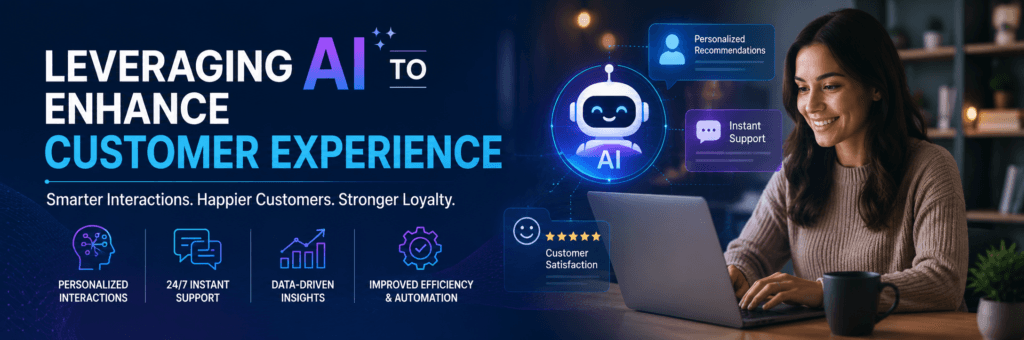
In an era where customer expectations are at an all-time high, businesses are increasingly turning to artificial intelligence (AI) to enhance customer experience. AI technologies can analyze vast amounts of data, predict customer behavior, and provide personalized interactions that significantly improve satisfaction and loyalty. This article will explore how businesses can leverage AI to enhance customer experiences, supported by real-life examples and practical advice.
Understanding AI in Customer Experience
AI encompasses a range of technologies, including machine learning, natural language processing, and predictive analytics. These tools enable businesses to understand their customers better and deliver tailored experiences. By harnessing AI, companies can not only streamline operations but also create more meaningful interactions with their customers.
Real-Life Example: Starbucks and Deep Brew
Starbucks has successfully integrated AI into its operations through a tool called Deep Brew. This AI-driven system uses machine learning and predictive analytics to personalize customer interactions. For instance, Deep Brew analyzes a customer’s past orders, location, weather conditions, and time of day to suggest menu items that they are likely to enjoy. This level of personalization not only enhances the customer experience but also drives loyalty and increases sales.
Key Ways AI Enhances Customer Experience
1. Personalized Recommendations
AI excels at analyzing customer data to provide personalized product recommendations. By examining past purchases, browsing behavior, and preferences, businesses can suggest items that resonate with individual customers.
Example: Amazon
Amazon is a pioneer in using AI for personalized recommendations. Its algorithms analyze user behavior—such as items viewed, purchased, or added to the cart—to suggest products tailored to each shopper’s interests. This not only improves the shopping experience but also boosts conversion rates as customers find relevant products more easily.
2. Chatbots for Instant Support
Chatbots powered by AI provide instant support for customer inquiries, available 24/7. They can handle multiple requests simultaneously, significantly reducing wait times and enhancing overall service efficiency.
Personal Anecdote
During my experience with an online retailer, I encountered an issue with my order. Instead of waiting for hours for a human representative, I used their AI chatbot. It quickly resolved my issue by providing tracking information and answering my questions about return policies. This immediate assistance made a positive impression on me as a customer.
3. Predictive Analytics for Anticipating Needs
AI can analyze historical data to predict future customer behavior. By understanding patterns in purchasing habits or service usage, businesses can proactively address customer needs before they arise.
Example: Netflix
Netflix employs predictive analytics to recommend shows and movies based on users’ viewing history. By anticipating what viewers might enjoy next, Netflix keeps audiences engaged and encourages them to spend more time on the platform—ultimately driving subscription renewals.
4. Enhanced Customer Insights
AI tools can analyze vast amounts of customer feedback from various sources—such as surveys, social media, and reviews—to extract valuable insights about preferences and sentiments.
Practical Advice
- Implement Sentiment Analysis: Use AI-driven sentiment analysis tools to gauge customer opinions about your products or services. This information can inform improvements and help tailor marketing strategies.
- Act on Insights: Regularly review insights generated by AI tools and integrate them into decision-making processes for product development or service enhancements.
5. Seamless Omnichannel Experience
AI enables businesses to create a seamless omnichannel experience by integrating data from various platforms—online stores, mobile apps, social media, and physical locations.
Example: Zomato
Zomato uses AI to analyze user preferences based on past orders and interactions across different platforms. This allows them to provide personalized restaurant recommendations that resonate with individual diners’ tastes. Whether customers are browsing on their website or using the app, they receive consistent suggestions that enhance their dining experience.
6. Virtual Assistants for Self-Service
AI-driven virtual assistants empower customers to resolve issues independently by providing step-by-step guidance through troubleshooting processes or answering queries.
Practical Advice
- Develop User-Friendly Interfaces: Ensure that virtual assistants are easy to navigate and provide clear instructions for users seeking self-service options.
- Monitor Performance: Regularly assess how well virtual assistants are performing by tracking usage metrics and user satisfaction scores.
Conclusion
Leveraging AI to enhance customer experience is no longer just an option; it’s a necessity in today’s competitive landscape. By implementing personalized recommendations, utilizing chatbots for instant support, employing predictive analytics to anticipate needs, gaining enhanced insights from customer feedback, creating seamless omnichannel experiences, and developing virtual assistants for self-service options, businesses can significantly improve customer satisfaction and loyalty.
As you consider integrating AI into your customer experience strategy, remember that the goal is not just about technology; it’s about creating meaningful connections with your customers. By focusing on their needs and preferences while harnessing the power of AI, you can build stronger relationships that drive long-term success in your business!