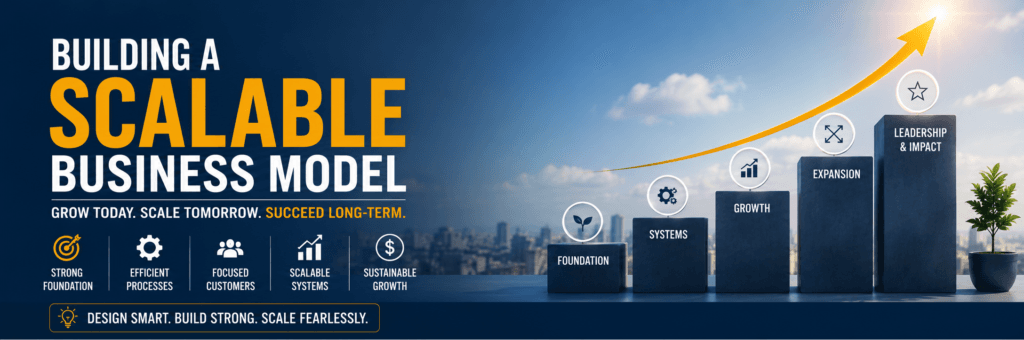
Building a scalable business model is essential for any organization looking to grow sustainably and effectively. A scalable business model allows a company to increase revenue without a corresponding increase in costs, enabling it to adapt to market changes and seize new opportunities. In this article, we’ll explore the key elements of creating a scalable business model, supported by real-life examples, personal anecdotes, and practical advice.
Understanding Scalability
Scalability refers to the ability of a business to grow and manage increased demand without compromising performance or increasing operational costs significantly. A scalable business can expand its operations efficiently, whether by reaching new markets, increasing product lines, or enhancing service offerings.
Real-Life Example: Amazon
Amazon is a prime example of a scalable business model. Initially starting as an online bookstore, Amazon leveraged technology and logistics to expand rapidly into various sectors, including electronics, groceries, and cloud computing. By investing in infrastructure and automation, Amazon can handle millions of transactions simultaneously while maintaining customer satisfaction.
Key Elements of Building a Scalable Business Model
1. Identify Your Target Market
Understanding your target market is crucial for scalability. Identifying who your customers are and what they need allows you to tailor your products or services accordingly.
Practical Advice
Conduct thorough market research to define your ideal customer profile. Use surveys, focus groups, and data analysis to gather insights into customer preferences and behaviors. This foundational knowledge will guide your product development and marketing strategies.
2. Develop a Strong Value Proposition
A clear value proposition differentiates your business from competitors and communicates the unique benefits you offer to customers. It should resonate with your target audience and address their pain points.
Example: Slack
Slack’s value proposition centers around improving team communication and collaboration. By providing an intuitive platform that integrates with various tools, Slack has positioned itself as an essential resource for businesses looking to enhance productivity. This strong value proposition has enabled Slack to scale rapidly across different industries.
3. Leverage Technology
In today’s digital age, technology plays a vital role in scalability. Investing in the right tools can automate processes, streamline operations, and enhance customer experiences.
Personal Anecdote
At a previous startup I worked for, we implemented a customer relationship management (CRM) system that automated our sales processes. This technology not only saved our sales team countless hours but also improved our ability to track leads and conversions. As a result, we were able to scale our sales efforts significantly without adding additional staff.
4. Standardize Processes
Creating standardized processes ensures consistency in operations as your business grows. Documenting procedures for key functions—such as customer service, sales, and production—helps maintain quality while allowing for easier onboarding of new employees.
Practical Advice
Develop standard operating procedures (SOPs) for critical tasks within your organization. Regularly review and update these documents to reflect best practices and any changes in technology or regulations.
5. Build a Strong Team
A scalable business relies on a capable team that can adapt to growth challenges. Hiring individuals with the right skills and mindset is essential for navigating the complexities of scaling.
Example: Zappos
Zappos is renowned for its customer service culture and employee empowerment. The company invests heavily in hiring individuals who align with its core values, ensuring that employees are not only skilled but also passionate about delivering exceptional service. This commitment has allowed Zappos to scale while maintaining high levels of customer satisfaction.
6. Focus on Customer Retention
Acquiring new customers is important, but retaining existing ones is often more cost-effective and beneficial for long-term growth. Building strong relationships with customers can lead to repeat business and referrals.
Practical Advice
Implement loyalty programs or personalized marketing strategies that encourage repeat purchases. Regularly solicit feedback from customers to understand their needs better and make improvements accordingly.
7. Monitor Key Performance Indicators (KPIs)
Establishing KPIs allows you to track progress toward your growth objectives effectively. Monitoring these metrics helps identify areas needing improvement and ensures that you remain aligned with your strategic goals.
Example: Netflix
Netflix uses various KPIs—such as subscriber growth rate, churn rate, and engagement metrics—to assess its performance continually. By analyzing these indicators, Netflix can make data-driven decisions about content production and marketing strategies, enabling it to scale efficiently in the competitive streaming landscape.
Conclusion
Building a scalable business model is crucial for organizations aiming for sustainable growth in today’s fast-paced environment. By identifying your target market, developing a strong value proposition, leveraging technology, standardizing processes, building a capable team, focusing on customer retention, and monitoring key performance indicators, you can create a robust framework that supports expansion without compromising quality or performance.
As you embark on this journey toward scalability, remember that flexibility is key; being open to adapting your strategies based on market feedback will position your business for long-term success. With careful planning and execution, you can navigate the challenges of growth while maximizing opportunities in an ever-evolving landscape!