In today’s digital age, data protection has become a critical concern for businesses of all sizes, particularly for small and medium-sized enterprises (SMEs). With limited resources and expertise, SMEs often find themselves vulnerable to data breaches and cyber threats. Implementing essential data protection measures is not just a legal obligation; it’s a fundamental strategy for ensuring business continuity and maintaining customer trust. This article explores key data protection measures that SMEs should adopt to safeguard their sensitive information.
Understanding the Importance of Data Protection
Data protection involves safeguarding important information from unauthorized access, corruption, or theft. For SMEs, this encompasses everything from customer data and financial records to employee information. A single data breach can lead to severe consequences, including financial losses, legal penalties, and reputational damage.
Real-Life Example: A small retail business experienced a data breach when hackers accessed their customer database. The incident not only resulted in significant financial losses due to fines and recovery costs but also eroded customer trust. Many loyal customers chose to take their business elsewhere after the breach was made public.
Essential Data Protection Measures for SMEs
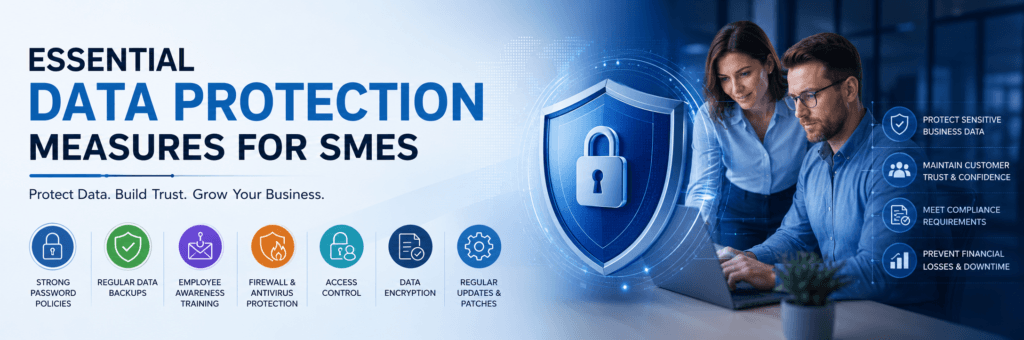
1. Educate and Train Employees
Employees are often the first line of defense against data breaches. Regular training on data protection best practices is essential. This includes recognizing phishing attempts, understanding password security, and knowing how to handle sensitive information.
Practical Advice: Conduct quarterly training sessions and provide resources that employees can refer to when they have questions about data security.
2. Implement Strong Password Policies
Weak passwords are a common vulnerability in many organizations. SMEs should enforce strong password policies that require complex passwords and regular updates.
Example: Encourage the use of password management tools that generate and store strong passwords securely.
3. Enable Multi-Factor Authentication (MFA)
MFA adds an extra layer of security by requiring users to verify their identity through multiple means before accessing sensitive information. This could include a combination of something they know (a password), something they have (a mobile device), or something they are (biometric verification).
Real-Life Anecdote: A small tech startup implemented MFA for all employee accounts after experiencing unauthorized access attempts. This simple step significantly enhanced their security posture against potential breaches.
4. Regularly Update Software
Keeping software up-to-date is crucial for protecting against known vulnerabilities. This includes operating systems, applications, and security software.
Practical Tip: Set up automatic updates wherever possible, or establish a routine schedule for manual updates to ensure that all systems are current.
5. Backup Data Regularly
Regular data backups are essential for recovery in case of a cyber incident or hardware failure. Ensure that backups are stored securely and separate from live data.
Example: A local bakery backed up its sales records daily on an external hard drive stored offsite. When a ransomware attack hit their system, they were able to restore their data without paying the ransom.
6. Control Access to Data
Limit access to sensitive information based on employees’ roles within the organization. Implement role-based access controls to ensure that employees only have access to the information necessary for their job functions.
Practical Advice: Regularly review access permissions and adjust them as roles change within the organization.
7. Secure Physical Devices
Physical security is just as important as digital security. Protect physical access to computers and servers with locks and security measures.
Example: A small accounting firm secured its office with keycard access systems and ensured that computers were locked when not in use.
8. Use Encryption for Sensitive Data
Encrypting sensitive data ensures that even if it is accessed without authorization, it remains unreadable without the proper decryption key.
Real-Life Example: A healthcare clinic encrypted patient records both at rest and in transit, ensuring compliance with regulations while protecting sensitive health information from unauthorized access.
9. Develop an Incident Response Plan
Having a clear plan in place for responding to data breaches can minimize damage and help recover quickly from incidents.
Practical Advice: Include steps for containment, communication with stakeholders, and recovery processes in your incident response plan. Make sure all employees are familiar with this plan.
10. Comply with Data Protection Regulations
Stay informed about relevant data protection laws such as GDPR or local regulations applicable to your industry. Compliance not only helps avoid legal penalties but also builds trust with customers.
Example: An e-commerce business conducted regular audits to ensure compliance with GDPR requirements regarding customer data handling, which helped them maintain customer confidence in their brand.
Conclusion
For SMEs, implementing robust data protection measures is essential not just for compliance but also for safeguarding their business against potential threats. By educating employees, enforcing strong password policies, utilizing multi-factor authentication, regularly updating software, backing up data, controlling access, securing physical devices, using encryption, developing an incident response plan, and complying with regulations, SMEs can create a comprehensive framework for protecting their valuable information.
In today’s digital landscape, taking proactive steps toward data protection can mean the difference between thriving or merely surviving as a business. By prioritizing these essential measures, SMEs can build resilience against cyber threats while fostering trust among customers—an invaluable asset in any competitive market!