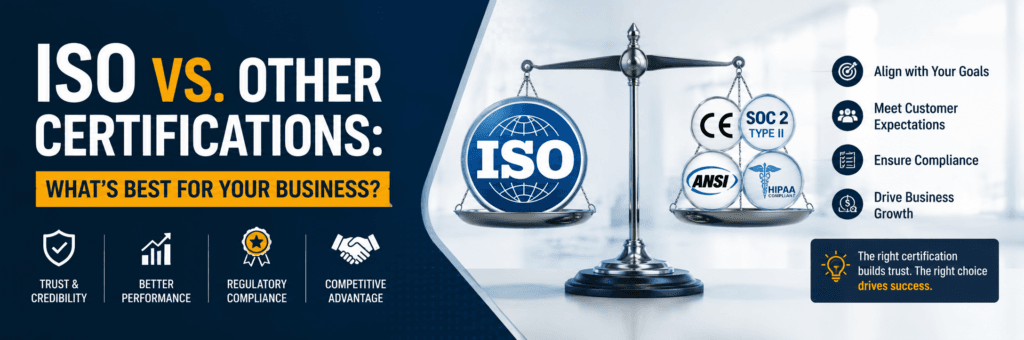
In today’s competitive business landscape, certifications can play a pivotal role in establishing credibility, improving processes, and enhancing customer satisfaction. Among the various certifications available, ISO (International Organization for Standardization) certifications are among the most recognized globally. However, businesses often find themselves weighing ISO against other certifications. Understanding the differences and benefits of these certifications is crucial for making informed decisions. This article will explore ISO certifications compared to other options, helping you determine what’s best for your business.
What is ISO Certification?
ISO certification refers to a formal recognition that an organization meets specific international standards set by ISO. These standards cover various aspects of business operations, including quality management (ISO 9001), environmental management (ISO 14001), and information security (ISO 27001). Achieving ISO certification demonstrates a commitment to maintaining high standards and continuous improvement.
Real-Life Example: A Manufacturing Firm
Consider a manufacturing firm that sought ISO 9001 certification to enhance its quality management processes. By implementing standardized procedures and focusing on customer satisfaction, the company not only improved product quality but also reduced waste and operational costs. This certification opened doors to new markets and clients who required ISO compliance as part of their vendor selection criteria.
Benefits of ISO Certification
- Global Recognition: ISO certifications are recognized worldwide, providing businesses with credibility in international markets.
- Improved Efficiency: The process of achieving certification often leads to streamlined operations and reduced waste.
- Increased Customer Satisfaction: By adhering to ISO standards, organizations can better meet customer expectations, leading to higher satisfaction rates.
- Access to New Markets: Many industries require suppliers to be ISO certified, making it easier for certified companies to enter new markets.
- Enhanced Risk Management: ISO standards often include guidelines for risk assessment and management, helping organizations mitigate potential issues before they arise.
Comparing ISO with Other Certifications
While ISO certifications offer numerous benefits, there are other certifications that businesses may consider based on their specific needs:
1. Six Sigma
Six Sigma is a methodology focused on process improvement and quality management. It aims to reduce defects and variability in processes through data-driven decision-making.
- Best For: Organizations looking to enhance operational efficiency and reduce errors.
- Key Focus: Statistical analysis and process improvement.
- Example: A healthcare provider implementing Six Sigma methodologies might streamline patient intake processes, reducing wait times and improving overall patient satisfaction.
2. CMMI (Capability Maturity Model Integration)
CMMI is a process improvement framework that helps organizations improve their performance through effective process management.
- Best For: Software development and engineering firms seeking to enhance their project management capabilities.
- Key Focus: Process maturity levels ranging from initial (chaotic) to optimizing (continuous improvement).
- Example: A software company adopting CMMI might implement structured project management practices that lead to more predictable project outcomes.
3. PCI DSS (Payment Card Industry Data Security Standard)
PCI DSS is a set of security standards designed to ensure that companies that accept credit cards maintain a secure environment.
- Best For: Businesses handling credit card transactions, such as retailers and e-commerce platforms.
- Key Focus: Protecting cardholder data and maintaining secure payment processing systems.
- Example: An online retailer achieving PCI DSS compliance demonstrates its commitment to protecting customer payment information, building trust with its clientele.
Choosing the Right Certification for Your Business
When deciding between ISO certification and other options, consider the following factors:
1. Business Objectives
Identify your organization’s primary goals. Are you looking to improve quality, enhance customer satisfaction, or streamline processes? Understanding your objectives will help you choose the most relevant certification.
2. Industry Requirements
Research industry-specific requirements or standards that may necessitate certain certifications. For example, if you operate in the healthcare sector, compliance with HIPAA regulations might be more critical than ISO certification.
3. Resources Available
Consider the resources—time, budget, and personnel—available for pursuing certification. Some certifications may require more extensive training or investment than others.
Personal Anecdote
In my experience working with a small tech startup, we initially pursued ISO 9001 certification due to its broad recognition and emphasis on quality management. However, after assessing our specific needs and industry demands, we realized that obtaining CMMI certification would better align with our goals of improving software development processes. This shift allowed us to focus our efforts on what truly mattered for our growth trajectory.
Conclusion
Both ISO certifications and other industry-specific certifications offer valuable benefits for organizations seeking to enhance their credibility and operational efficiency. By understanding the unique advantages of each option—whether it’s the global recognition of ISO or the targeted improvements offered by Six Sigma or CMMI—businesses can make informed decisions that align with their strategic objectives.
As you navigate the certification landscape, remember that the right choice will depend on your specific needs, industry requirements, and long-term goals. With careful consideration and planning, achieving certification can pave the way for greater success in today’s competitive marketplace!