Effective time management is a crucial skill for project leaders, especially in today’s fast-paced business environment. As project leaders juggle multiple tasks, deadlines, and team dynamics, mastering time management techniques can significantly enhance productivity and ensure project success. This article will explore practical time management strategies tailored for project leaders, supported by real-life examples and personal anecdotes to make the concepts relatable and actionable.
The Importance of Time Management in Project Leadership
Time management is not just about keeping a schedule; it’s about optimizing resources, prioritizing tasks, and ensuring that projects are completed on time and within budget. Effective time management allows project leaders to:
- Minimize stress and avoid burnout.
- Enhance team collaboration and communication.
- Improve overall project outcomes.
Real-Life Example: The Impact of Poor Time Management
Consider a software development project that fell behind schedule due to poor time management. The project leader failed to set clear deadlines and did not monitor progress effectively. As a result, the team struggled to meet client expectations, leading to frustration and a loss of trust. This example illustrates how critical it is for project leaders to implement effective time management strategies from the outset.
Key Time Management Techniques for Project Leaders
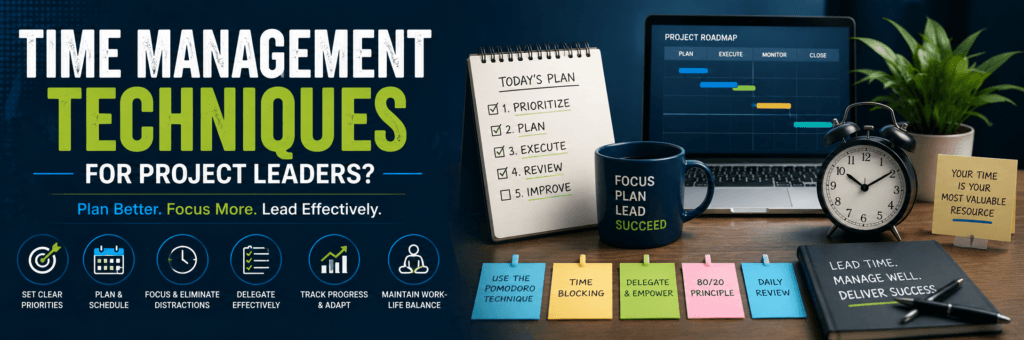
1. Create a Detailed Project Plan
A well-defined project plan serves as the foundation for effective time management. It outlines tasks, timelines, responsibilities, and milestones.
Practical Advice
- Use Project Management Tools: Consider tools like Trello, Asana, or Jira to create visual project plans that everyone can access. These platforms allow you to break down tasks into manageable parts and assign deadlines.
- Involve Your Team: Collaborate with your team when developing the project plan to ensure buy-in and realistic timelines.
2. Prioritize Tasks Effectively
Not all tasks are created equal. Learning to prioritize tasks based on urgency and importance can help you focus on what truly matters.
Example: The Eisenhower Matrix
The Eisenhower Matrix is a helpful tool for prioritization. It categorizes tasks into four quadrants:
- Important and Urgent: Do these tasks immediately.
- Important but Not Urgent: Schedule these tasks.
- Not Important but Urgent: Delegate these tasks.
- Not Important and Not Urgent: Eliminate these tasks.
By using this matrix, you can ensure that you’re focusing on high-impact activities.
3. Delegate Wisely
Delegation is a powerful time management technique that allows you to distribute workload effectively while empowering your team members.
Personal Anecdote
In my experience leading a marketing campaign, I learned the importance of delegation firsthand. Initially, I tried to handle everything myself, which led to overwhelming stress. Once I started delegating specific tasks based on team members’ strengths—like graphic design or social media management—the campaign ran more smoothly, and the team felt more engaged.
4. Set Clear Deadlines
Setting clear deadlines helps keep everyone accountable and ensures that tasks are completed on time. Deadlines should be realistic yet challenging enough to motivate your team.
Practical Advice
- Break Projects into Milestones: Establish milestones throughout the project timeline to track progress and celebrate small wins.
- Communicate Deadlines Clearly: Ensure that all team members understand their responsibilities and deadlines from the start.
5. Monitor Progress Regularly
Regularly monitoring progress allows you to identify potential bottlenecks early on and make necessary adjustments.
Example: Weekly Check-Ins
A project I managed involved weekly check-ins with the team to review progress against our timeline. During these meetings, we discussed what was working well and what challenges we faced. This proactive approach allowed us to stay on track while addressing issues before they escalated.
6. Use Time Management Tools
Leveraging technology can significantly enhance your time management efforts. Various tools can help you organize tasks, track progress, and communicate effectively.
Recommended Tools
- Trello: A visual tool for organizing tasks using boards and cards.
- Slack: A communication platform that facilitates quick discussions without cluttering email inboxes.
- Google Calendar: Great for scheduling meetings and setting reminders for important deadlines.
7. Take Breaks to Recharge
While it may seem counterintuitive, taking regular breaks can enhance productivity by preventing burnout and maintaining focus.
Practical Advice
- Implement the Pomodoro Technique: Work in focused sprints of 25 minutes followed by a 5-minute break. After four sprints, take a longer break (15–30 minutes). This technique helps maintain energy levels throughout the day.
- Encourage Team Breaks: Promote a culture where taking breaks is seen as beneficial for productivity rather than a waste of time.
Conclusion
Mastering time management techniques is essential for project leaders aiming to drive their teams toward success while maintaining efficiency. By creating detailed project plans, prioritizing tasks effectively, delegating wisely, setting clear deadlines, monitoring progress regularly, leveraging technology, and encouraging breaks, you can optimize your workflow and enhance your team’s performance.
As you consider how best to implement these strategies or support others through this process, remember that effective time management is not just about getting things done; it’s about creating an environment where your team can thrive. With the right approach in place, you can lead your projects confidently toward successful outcomes!